• 博客访问:5811
    • 博文数量: 139
    • 用 户 组: 普通用户
    • 注册时间:2026-08-26
    • 认证徽章:
    个人简介

    白鹭

    文章存档

    08-25(4571)

    08-26(2237)

    08-24(1151)

    08-22(3972)

    翻译 2026-08-26

    分类: 家族诞生

    翻译

    China opens exhibition to preserve, bring linguistic diversity to life_我的网站

    重口味

    一 |     

    A visitor listens to dialects of various regions in Hunan at the Exhibition Hall of the Project for the Protection of Language Resources of China in Changsha, central China's Hunan Province, Aug. 24, 2026. A new exhibition hall dedicated to the preservation of China's diverse language resources opened on Monday in Changsha, capital of central China's Hunan Province, bringing a decade-long effort to document languages and dialects to the public through digital and interactive displays. The Exhibition Hall of the Project for the Protection of Language Resources of China, located in the Hunan Museum, brings together recordings and other language materials collected from more than 1,800 field survey sites across China, covering Chinese dialects, ethnic minority languages and related cultural traditions. (Xinhua/Xue Yuge)
        A visitor listens to dialects of various regions in Hunan at the Exhibition Hall of the Project for the Protection of Language Resources of China in Changsha, central China's Hunan Province, Aug. 24, 2026. A new exhibition hall dedicated to the preservation of China's diverse language resources opened on Monday in Changsha, capital of central China's Hunan Province, bringing a decade-long effort to document languages and dialects to the public through digital and interactive displays. The Exhibition Hall of the Project for the Protection of Language Resources of China, located in the Hunan Museum, brings together recordings and other language materials collected from more than 1,800 field survey sites across China, covering Chinese dialects, ethnic minority languages and related cultural traditions. (Xinhua/Xue Yuge)Putting on headphones at a new exhibition hall in central China, visitors can hear a chorus of voices from across the country, including regional dialects, traditional songs in ethnic minority languages and field recordings of languages on the verge of extinction.
    The Exhibition Hall of the Project for the Protection of Language Resources of China opened Monday in Changsha, capital of central China's Hunan Province, bringing decade-long efforts to document languages and dialects to the public through digital and interactive displays.
    Located in the Hunan Museum, the exhibition brings together recordings and other language materials collected from more than 1,800 field survey sites across China. More than 30 language-related cultural relics are also on display.
    The recordings represent 10 major Chinese dialects and more than 100 ethnic minority languages, including Mongolian, Tibetan, Uygur and Zhuang, said Chen Xuliang, deputy Party secretary of the Hunan Museum.
    "Digital technology is helping bring the results of language preservation research out of databases and into public cultural spaces," he said.
    The exhibition draws on materials collected through a national language preservation project launched in 2015 to document and preserve the country's diverse languages and dialects. It is the world's largest project of its kind, according to experts.
    Over the past decade, researchers have traveled to remote mountain villages and pastoral areas to find native speakers of different ages. They systematically recorded words, grammatical examples, oral traditions and other language materials, turning oral memories at risk of disappearing in digital records that can be preserved for generations.
    The work has become increasingly urgent as the number of native speakers of some languages declines.
    China is home to more than 100 languages and numerous dialects. Some languages, including Hezhen and Manchu, now have fewer than 100 speakers.
    Economic integration, population mobility and the social changes they bring are making it increasingly difficult to preserve languages and cultural traditions around the world, said Wang Lining, a professor at Beijing Normal University's School of Chinese Language and Literature and a participant in the language preservation project.
    Many languages lack well-developed writing systems, Wang said, meaning knowledge and memories passed down orally can be lost when their speakers die.
    The new exhibition aims to bring such preservation work closer to the public. It also promotes the principles of the "Yuelu Proclamation," which was officially released in 2019 and described as UNESCO's first permanent document themed on the protection of linguistic diversity.
    Experts attending the exhibition's opening said a key challenge is how to use artificial intelligence and digital museum technologies to turn vast collections of field recordings into cultural experiences the public can engage with.
    For Wang, documenting endangered languages is only the beginning.
    "In the past, the focus was on recording endangered languages and preserving samples of their voices," she said. "In the future, preservation needs to move toward keeping languages alive."
    The exhibition hall, Wang said, is part of that shift, taking language resources beyond academic research and bringing them closer to everyday life.

    People visit the Exhibition Hall of the Project for the Protection of Language Resources of China in Changsha, central China's Hunan Province, Aug. 24, 2026. A new exhibition hall dedicated to the preservation of China's diverse language resources opened on Monday in Changsha, capital of central China's Hunan Province, bringing a decade-long effort to document languages and dialects to the public through digital and interactive displays.

The Exhibition Hall of the Project for the Protection of Language Resources of China, located in the Hunan Museum, brings together recordings and other language materials collected from more than 1,800 field survey sites across China, covering Chinese dialects, ethnic minority languages and related cultural traditions. (Xinhua/Xue Yuge)
        People visit the Exhibition Hall of the Project for the Protection of Language Resources of China in Changsha, central China's Hunan Province, Aug. 24, 2026. A new exhibition hall dedicated to the preservation of China's diverse language resources opened on Monday in Changsha, capital of central China's Hunan Province, bringing a decade-long effort to document languages and dialects to the public through digital and interactive displays. The Exhibition Hall of the Project for the Protection of Language Resources of China, located in the Hunan Museum, brings together recordings and other language materials collected from more than 1,800 field survey sites across China, covering Chinese dialects, ethnic minority languages and related cultural traditions. (Xinhua/Xue Yuge)
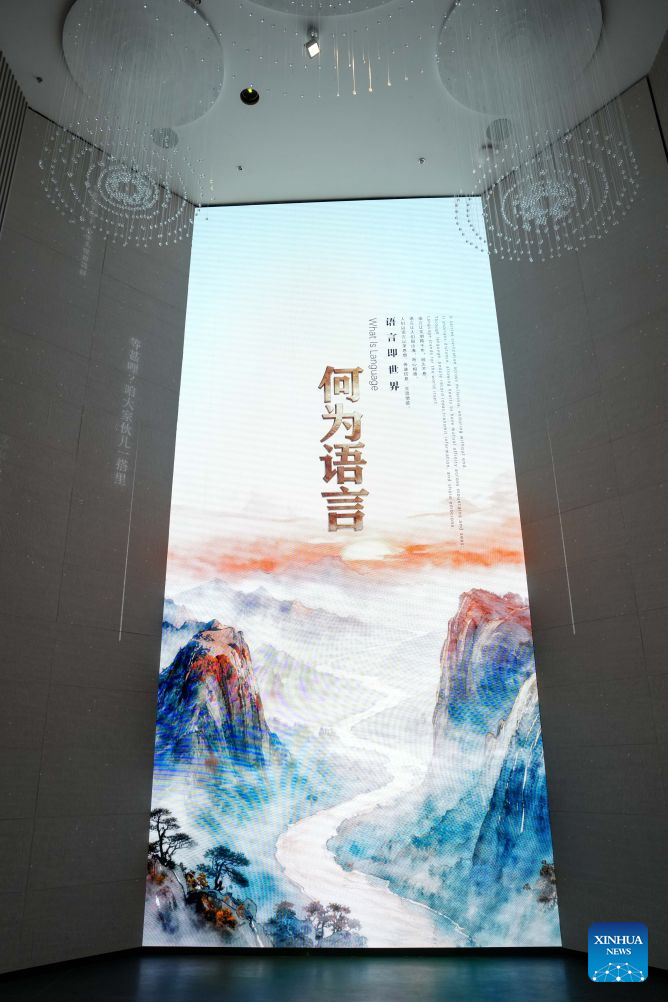
    This photo taken on Aug. 24, 2026 shows an interior view of the Exhibition Hall of the Project for the Protection of Language Resources of China in Changsha, central China's Hunan Province. A new exhibition hall dedicated to the preservation of China's diverse language resources opened on Monday in Changsha, capital of central China's Hunan Province, bringing a decade-long effort to document languages and dialects to the public through digital and interactive displays.

The Exhibition Hall of the Project for the Protection of Language Resources of China, located in the Hunan Museum, brings together recordings and other language materials collected from more than 1,800 field survey sites across China, covering Chinese dialects, ethnic minority languages and related cultural traditions. (Xinhua/Xue Yuge)
        This photo taken on Aug. 24, 2026 shows an interior view of the Exhibition Hall of the Project for the Protection of Language Resources of China in Changsha, central China's Hunan Province. A new exhibition hall dedicated to the preservation of China's diverse language resources opened on Monday in Changsha, capital of central China's Hunan Province, bringing a decade-long effort to document languages and dialects to the public through digital and interactive displays. The Exhibition Hall of the Project for the Protection of Language Resources of China, located in the Hunan Museum, brings together recordings and other language materials collected from more than 1,800 field survey sites across China, covering Chinese dialects, ethnic minority languages and related cultural traditions. (Xinhua/Xue Yuge)
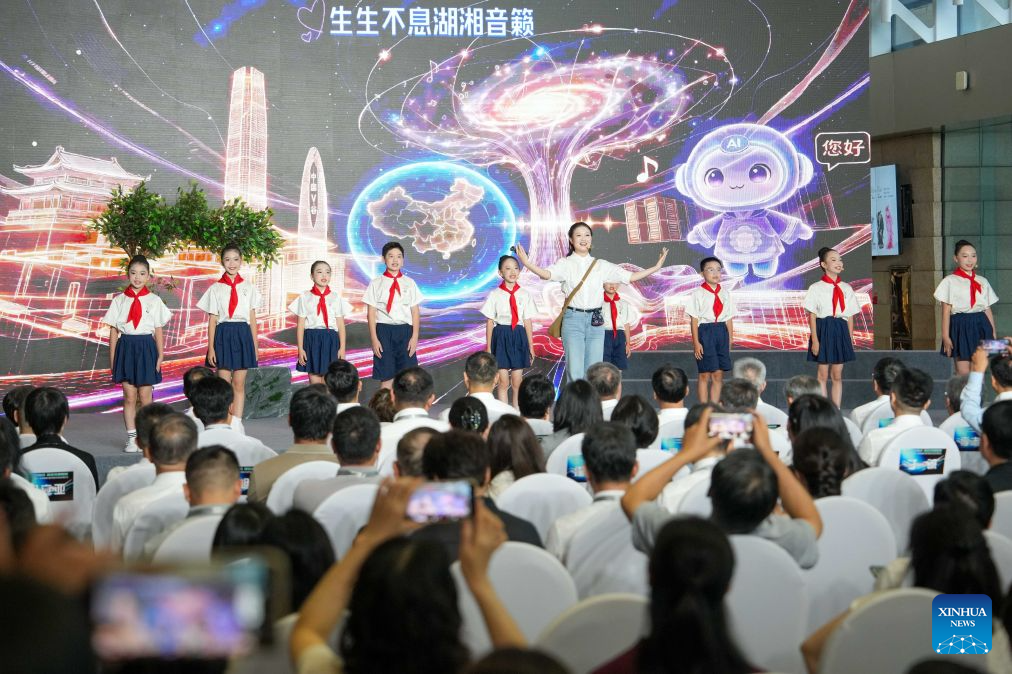
    Children perform at the opening ceremony of the Exhibition Hall of the Project for the Protection of Language Resources of China in Changsha, central China's Hunan Province, Aug. 24, 2026. A new exhibition hall dedicated to the preservation of China's diverse language resources opened on Monday in Changsha, capital of central China's Hunan Province, bringing a decade-long effort to document languages and dialects to the public through digital and interactive displays.

The Exhibition Hall of the Project for the Protection of Language Resources of China, located in the Hunan Museum, brings together recordings and other language materials collected from more than 1,800 field survey sites across China, covering Chinese dialects, ethnic minority languages and related cultural traditions. (Xinhua/Xue Yuge)
        Children perform at the opening ceremony of the Exhibition Hall of the Project for the Protection of Language Resources of China in Changsha, central China's Hunan Province, Aug. 24, 2026. A new exhibition hall dedicated to the preservation of China's diverse language resources opened on Monday in Changsha, capital of central China's Hunan Province, bringing a decade-long effort to document languages and dialects to the public through digital and interactive displays. The Exhibition Hall of the Project for the Protection of Language Resources of China, located in the Hunan Museum, brings together recordings and other language materials collected from more than 1,800 field survey sites across China, covering Chinese dialects, ethnic minority languages and related cultural traditions. (Xinhua/Xue Yuge)

    二 |         菲律宾这次派来闯黄岩岛的三架飞机,加起来的战斗力还不如中国一架武装直升机。

    三 | 但如果你觉得这是个笑话,那就上当了。

    四 | 岛人机、C-208、PA-31T,全是些老旧的轻型螺旋桨飞机,别说打仗,连像样的自卫能力都没有。派这种杂牌机队来闯中国领空,看起来像一场闹剧,实则每一步都经过精心算计。

    五 | 它们闯的是中国的领空,真正想拉下水的,却是华盛顿。    要理解菲方意图,得把时间线拉长。今年3月,菲律宾就曾派两架C-208侵入黄岩岛领空,被解放军警告驱离。7月,菲公务船多次闯入黄岩岛海域被驱离。

    六 | 8月1日,中国南部战区直接在黄岩岛领海领空组织海空联合演训,摆明了要强化管控。结果仅仅过了二十天,菲方就把挑衅从海面搬到了空中。这个节奏不是随机的,是一套经过设计的切香肠战术。每次前进一小步,试探中国反应底线。中方反应温和,下一步就再往前蹭一点;中方反应激烈,菲方就立刻摆出受害者姿态,向国际社会哭诉中国威胁。    而选择小型飞机而非军用战机,更是精心算计。派战斗机闯领空,那是赤裸裸的军事挑衅,中国完全可以依法采取强硬措施,国际社会也无话可说。但派民用改装的小型飞机进来,性质就模糊了。菲方可以辩称这是巡逻、搜救、民用飞行,把军事入侵包装成低烈度的灰色行动。这种飞机飞得慢、目标小,真要采取强硬手段,舆论上反而容易被倒打一耙,说中国以大欺小、过度反应。菲方赌的就是中国在这种灰色地带面前投鼠忌器,既不能真打,又不能不拦,只能反复喊话驱离,而菲方则借此制造我经常来的既成事实。        更值得警惕的是,每一次挑衅都在为美国介入积累素材。菲律宾很清楚,单凭自己的力量,在南海占不到任何便宜。它唯一的筹码,就是把美国拖进来。所以每次黄岩岛出事,菲方第一时间不是和中国交涉,而是向华盛顿汇报,邀请美国军舰来自由航行,拉着日本、澳大利亚搞联合巡逻。

    七 | 8月中旬,菲海岸警卫队发言人甚至抛出所谓铁三角理论,声称黄岩岛是中国南海战略的最后一块拼图,一旦军事化全球航运都得遭殃。这话根本不是说给中国听的,是说给美国国会和五角大楼听的,目的就是要美国加大对菲军事援助和南海介入力度。

    八 |     黄岩岛的战略价值,决定了它注定是博弈焦点。作为中沙群岛唯一常年出水的岛礁,它东距菲律宾吕宋岛仅两百多公里,直面美军苏比克湾基地,扼守巴士海峡进出南海的国际航道。

    九 | 谁控制了黄岩岛,谁就掌握了南海东北部的主动权。对中国而言,黄岩岛与西沙永兴岛、南沙美济礁遥相呼应,一旦完成必要设施建设,就能形成覆盖南海主要航道的战略三角。这也是菲律宾和美国都急着在黄岩岛制造事端的原因,它们要在中国完成布局之前,尽可能把水搅浑。

    十 |     南部战区这次的回应,措辞和行动都值得细品。发言人用的是跟踪监视、喊话警告,没有升级到更激烈的手段,但同时明确强调正告菲方立即停止侵权挑衅,并表示时刻保持高度戒备。

    十一 | 这是一种有节制的强硬,既守住了主权底线,又没有给对方制造升级借口的机会。但克制不等于纵容,8月1日的联合演训已经释放了明确信号,中国在黄岩岛的管控只会加强,不会削弱。        菲律宾应该明白一个道理,靠三架老旧飞机刷存在感,改变不了黄岩岛是中国领土的事实,也换不来真正的安全。把希望寄托在美国的军事承诺上,更是危险的赌博。美国需要的是一个牵制中国的棋子,而不是一个把自己拖入战争的盟友。真到了关键时刻,谁会为几架螺旋桨飞机和一个环礁跟核大国翻脸,马尼拉最好想清楚。

    十二 | 返回,查看更多

    Current article:http://wym5q9.shangfochengcongshuaizhuang.buzz/news/20260826_293.html

    Published on:19:19:33


    阅读527 | 评论759 | 转发918 |
    闪电侠
    浮出水面

    成王宗08-21

    血色浪漫
    熊出没

    陵安08-25

    诡域新娘
    大众点评

    开帝侯08-23

    悟空传
    出发吧爱情

    文平08-26

    阴阳路
    超级战舰

    纯文宗成08-25

    王者荣耀
    伤痕我心

    龙安08-26

    斗破苍穹
    评论热议
    请登录后评论。

    登录 注册