
{主关键词}
三毛流浪记
Chinese researchers identify target to develop depression drug using traditional ethnic medicine in Yunnan_我的网站

一 |
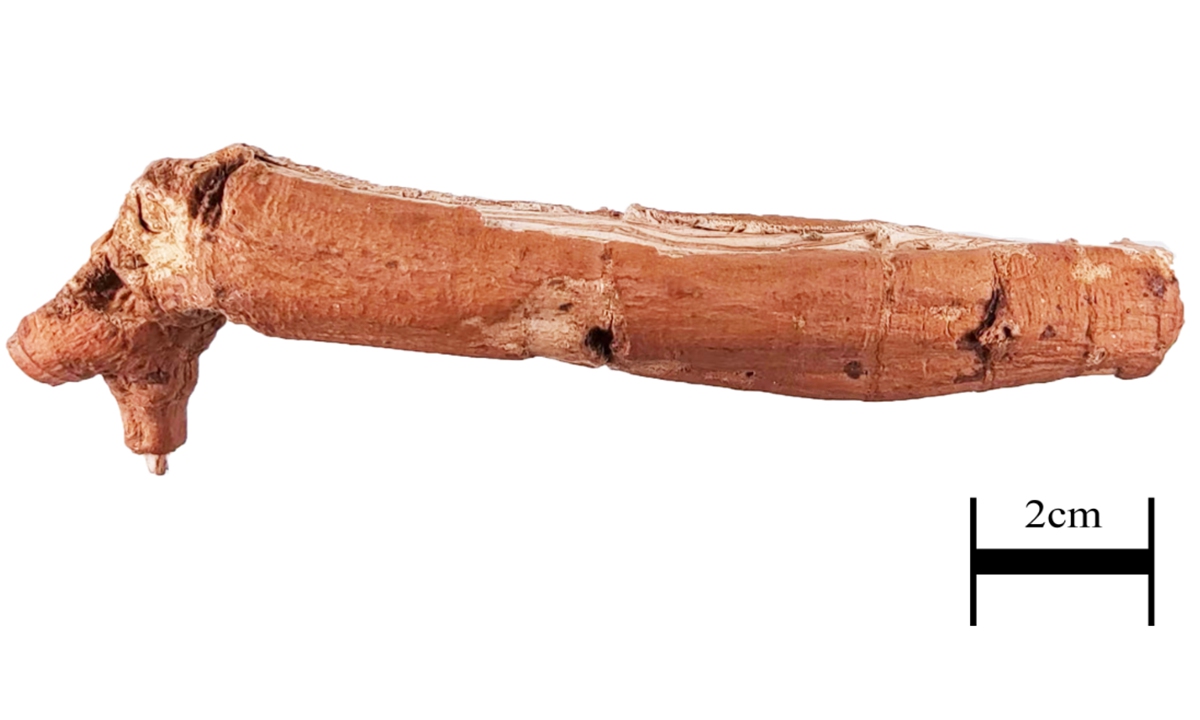
A Chinese research team has identified a new potential target to develop antidepressant drug from Qingyangshen, or Root of Auricledleaf Swallowwort, a traditional ethnic medicinal plant long used in Southwest China's Yunnan Province, according to Kunming University of Science and Technology, Science and Technology Daily reported Sunday.
The team, led by professors Xu Tianrui and Xiang Cheng from the university's School of Life Science and Technology, found that Qingyangshen glycosides, the plant's core active compound, can alleviate depression-related behaviors by simultaneously suppressing inflammation, reducing oxidative damage and stabilizing neurotransmitters in the brain.
The findings were published in the international journal Phytomedicine.
Depression has become a widespread mental health disorder globally, while existing clinical drugs fail to provide effective treatment for more than 30 percent of patients, according to the researchers. Previous studies have established a strong link between chronic inflammation and depression, but existing anti-inflammatory drugs have limited targeting capabilities, underscoring the need for new therapeutic targets and lead compounds.
Qingyangshen, a plant of the Cynanchum genus in the Apocynaceae family, has long been used as a traditional medicine by ethnic groups including the Naxi, Yi and Bai peoples in Yunnan, mainly for treating neurological conditions such as epilepsy and neurasthenia.
The researchers systematically examined the pharmacological effects of Qingyangshen extract and its core active compound, Qingyangshen glycosides. Tests using mouse, zebrafish and fruit fly models repeatedly showed that the compound significantly improved depression-related behaviors induced by inflammation, according to the report.
To identify the compound's target, the team developed a dual-discrimination model for four subtypes of prostaglandin E2 receptors and combined it with AI-powered machine learning. The researchers screened hundreds of G protein-coupled receptors and identified the prostaglandin E2 subtype 4 receptor as the direct target of Qingyangshen glycosides.
Multiple molecular experiments confirmed that the compound binds directly to the receptor and acts as an inhibitory ligand. Further experiments involving animals with the receptor knocked out in the hippocampus showed that the antidepressant effects of Qingyangshen glycosides disappeared completely when the receptor was absent, providing the first in-vivo evidence that the receptor is essential for the compound's therapeutic effects.
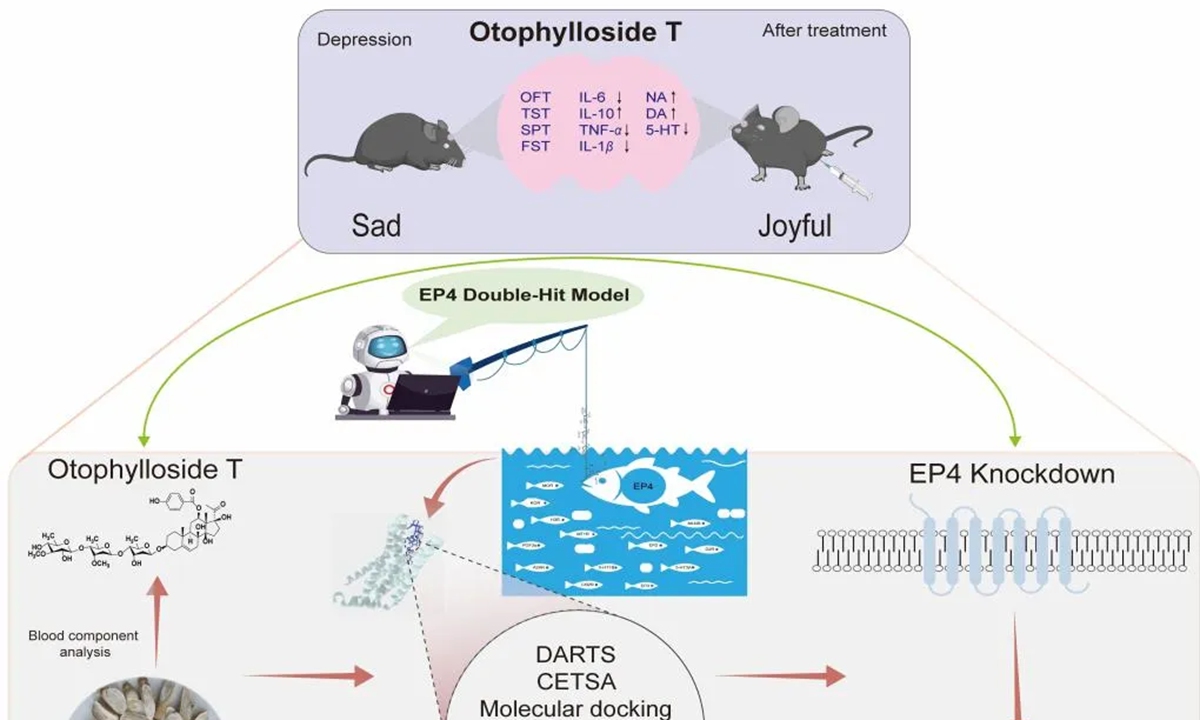
The study establishes the prostaglandin E2 subtype 4 receptor as a potential new target for antidepressant drug development and points to a new approach to treating depression through inflammatory pathways. It also identifies Qingyangshen glycosides as a potential lead compound for developing highly targeted anti-inflammatory antidepressants, creating a research chain from ethnic medicinal plants and active compounds to drug targets and new drug development.
Global Times
。 8月25日,A股三大指数早盘集体下跌,截至午间收盘,上证指数跌0.15%,深证成指跌0.78%,创业板指跌1.43%;北证50涨0.7%。

二 | 沪深两市成交额约11472.13亿元,较前一个交易日缩量约2238.57亿元。截至午盘,全市场3684只股票上涨、1777只股票下跌,其中48只涨停、4只跌停。
板块方面,跨境支付、农业种植、乳业奶粉、美容护理等行业以及概念涨幅居前;黄金、贵金属、锂矿、稀土、能源金属等行业以及概念跌幅居前。
Current article:http://wym5q9.shangfochengcongshuaizhuang.buzz/6u99f0/24xawg.html
Published on:01:24:41
- 6497拱北口岸停车贵?这份珠海拱北口岸停车攻略帮你省钱!
- 54990中国构建“黄金大外环”激活经济新走廊,中国构建“黄金大外环”激活经济新走廊
- 8293499国家级赛道启动!杭州一地打造“AI+文旅先行区”,六大行动发布
- 4047604强台风“沙德尔”将于27日夜间至28日上午在浙江象山到福建福清一带沿海登陆;宁波发布台风警报:明天夜里起有中到大雨部分暴雨个别大暴雨
- 309文华东方退市:一场押上148年家底的梭哈
- 53258G1内线吃亏是意外还是注定?湖人会不会后悔没带杰米森进季后赛?
- 3803184Google正测试乒乓球机器人i-Sim2Real 已能连续对打340次
- 7033447China’s ‘Xuelong 2’ begins first ice station survey in central Arctic Ocean
- 9288欧洲央行施纳贝尔:欧洲央行需进一步加息以遏制通胀风险
- 909942025京东618活动5月30日20点正式开始持续到6月20日,满减规则和最新红包口令是?
- 63022Mystic Stone Castle Built by 17th-Century Danish King's Illegitimate Offspring Unearthed in Norway
- 597113真实的降维打击是什么?
- 3044816特朗普的波音飞机在佛罗里达机场滑行时与停放的飞机相撞,特朗普情况不明
- 129162中国人民银行拟细化有关规定督促支付机构合规展业
- 709231A股午评:创业板指半日跌1.43%,黄金、锂矿、稀土等概念走弱
- 9718任天堂正式确认 Switch 2 英国地区具体涨价金额
- 23295“药明系”集体上涨!CXO公司集中释放积极信号 机构看好订单回暖持续性
- 665971全国鸡肉价格连涨两周 我国鸡肉产品出口大增
- 3113五輪フィギュア女子フリー21.7% 早朝に高視聴率!坂本花織が銀&中井亜美が銅 アリサ・リュウ金
- 905纳达尔鼓励阿尔卡拉斯:希望没受伤,接下来的赛事全力以赴
- 75194习近平抵达撒马尔罕 开始对乌兹别克斯坦共和国进行国事访问并出席上海合作组织成员国元首理事会第二十二次会议
- 5698928天空:利物浦不愿为明特支付8000万镑,球员预计要伤缺至10月份
我的网站热门国内
- Copyright @ 2016-2017 我的网站 版权所有